CONVERSATION RADAR · DATING
The date went well. So why wasn't there a second one?
Conversation Radar teaches you to notice the signals that tell you when interest is opening, flattening, or asking for something different, while you are still on the date.
Your 36-hour price is $47. After that, the standing price is $197.
Instant accessLifetime access60-day guarantee
As featured in




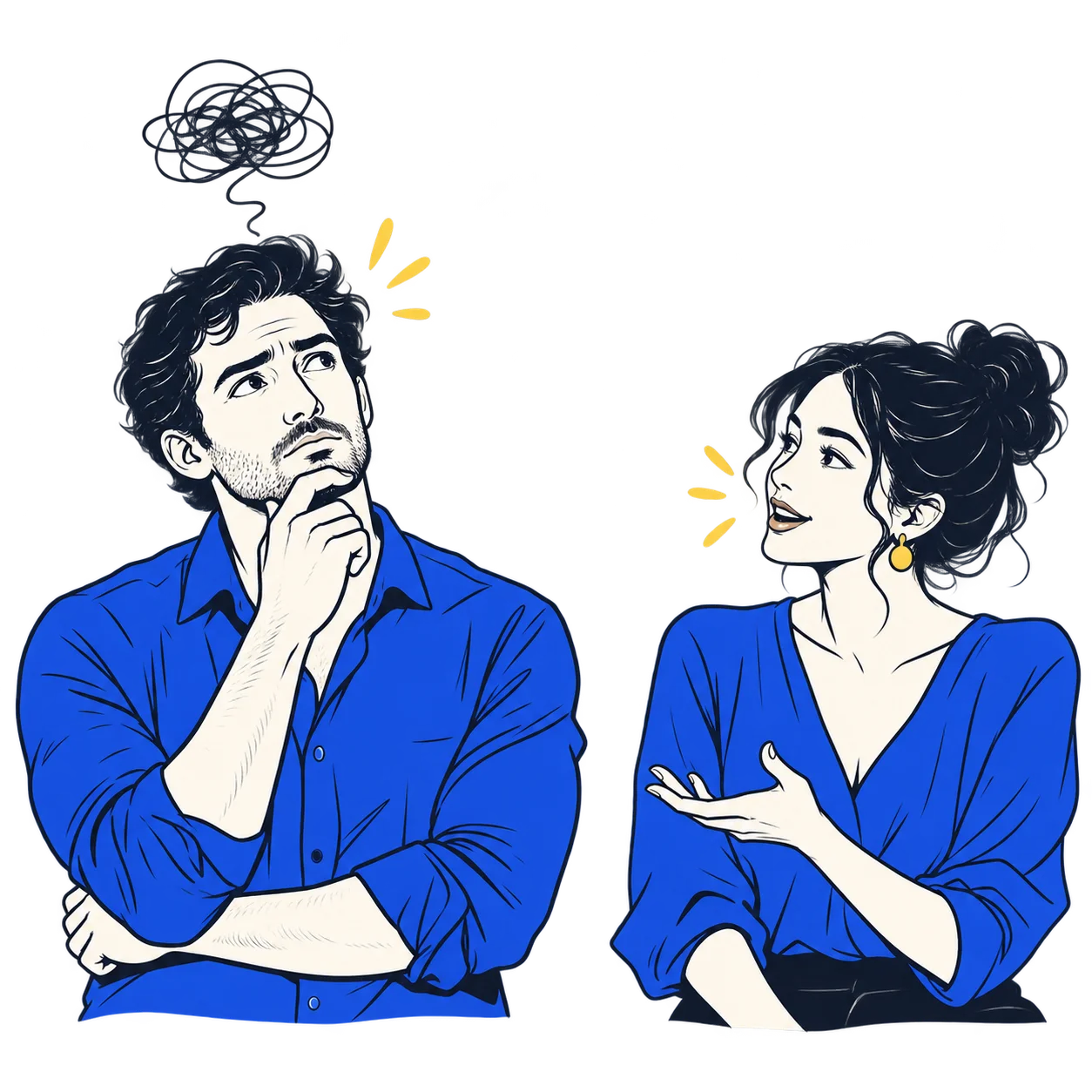
One collects facts. The other notices where the energy moved.
Situation: They mention a trip and their whole expression changes.
| LOW RADAR | HIGH RADAR | |
|---|---|---|
| What they notice | You stay with information. | You notice the person. |
| Response | “How long were you there?” | “You smiled before you even finished saying that. What happened on that trip?” |
| What the response does | Perfectly normal question. But it ignores the shift. | You invite the story behind the change. |
The difference is not a better line. It is responding to the signal that was already there. | ||
Nothing went wrong. That's what makes it so hard to fix.
The date lasted longer than expected. The conversation moved. You laughed.
There were no disasters. At the end:
“This was fun.”
Maybe a hug. Maybe:
“We should do it again.”
You go home thinking:
“That went pretty well.”
Then the messages get slower. The second date never becomes specific. And now you are replaying the night looking for the mistake.
Sometimes there was no single mistake. The useful information was distributed across the entire interaction. A change in enthusiasm.
An opening you answered literally. A personal detail you moved past too quickly. A moment where they leaned in.
A moment where they stopped. A question that was carrying more than the words. Conversation Radar teaches you where to look.
You do not want a better first-date performance.
You want to know when the connection is actually mutual. You want the conversation to move beyond biography. You want to notice when someone is opening the door to something more personal.
You want to know when to stay with a moment instead of jumping to the next question. You want the end of the date to feel clear enough that neither person has to decode it for three days.
You want attraction and interest to become something you can read more accurately, not something you only guess at afterward. And you want to do that without turning into someone who performs dating techniques.
A good conversation and a good date are not always the same thing.
You can have:
- two hours of easy conversation;
- dozens of shared interests;
- plenty of laughter;
- zero awkward silences;
and still leave without knowing whether the interaction ever became personal. Because content can carry a date for a long time. Work.
Travel. Restaurants. Shows.
Family history. Stories. All interesting.
But the question is not only:
“Did we have things to talk about?”
It is:
“What was happening between us while we were talking?”
That is a different layer.
You have been listening for words that almost never arrive.
People rarely say:
“I am interested. You should move this conversation into something more personal now.”
Or:
“I was giving you an opening five minutes ago.”
Or:
“I am enjoying this, but the conversation still feels like an interview.”
Dating communicates in smaller increments. Enthusiasm. Reciprocity.
Curiosity. Personal disclosure. Playfulness.
Comfort. Hesitation. Pacing.
Energy. The literal words matter. So do the signals surrounding them.
Trying to make the date go well can make you less aware of the date you're actually having.
You prepare good questions. You try to keep the energy up. You look for something interesting to say.
You avoid dead air. You try not to seem nervous. You try to show enough value without bragging.
And while you are managing the performance, you can miss the simplest piece of information available:
What is the other person actually giving back?
A date is not a presentation. You do not need to win the room. You need to notice the person sitting across from you.
The hardest signals to see are often the ones you have rules against responding to.
“If they're interested, they'll make it obvious.”
Sometimes. Often, interest arrives as an invitation small enough to ignore safely.
“I don't want to make it awkward.”
Good instinct. But calibration is not forcing a moment. It is noticing whether a moment is already there.
“I don't want to seem too eager.”
So you wait for certainty. Certainty rarely arrives before somebody has to take a small risk.
“Chemistry is either there or it isn't.”
Chemistry matters. So does whether either person notices the openings that let chemistry become visible.
“I should just be myself.”
Yes. Seeing the person more clearly does not make you less yourself.
People who seem “naturally good at dating” are not always more charming.
Often, they are more responsive. They notice the story that suddenly gets more personal. The teasing that invites some playfulness back.
The moment eye contact lingers. The topic that brings more energy. The question that is not really asking for another fact.
The moment the other person gives them something vulnerable and waits to see what they do with it. And they respond in proportion. Not too much.
Not nothing. That is calibration.
You do not need a pickup system. You need a better live read.
Conversation Radar does not teach you how to manufacture attraction. It teaches you to notice more accurately what is actually happening.
Is interest becoming more specific?
Is the other person reciprocating?
Did the energy change?
Is this an invitation to go deeper?
Is the interaction flattening?
Am I pushing because I want the moment, or responding because the moment is already there?
That is a much more useful dating skill than memorizing lines.
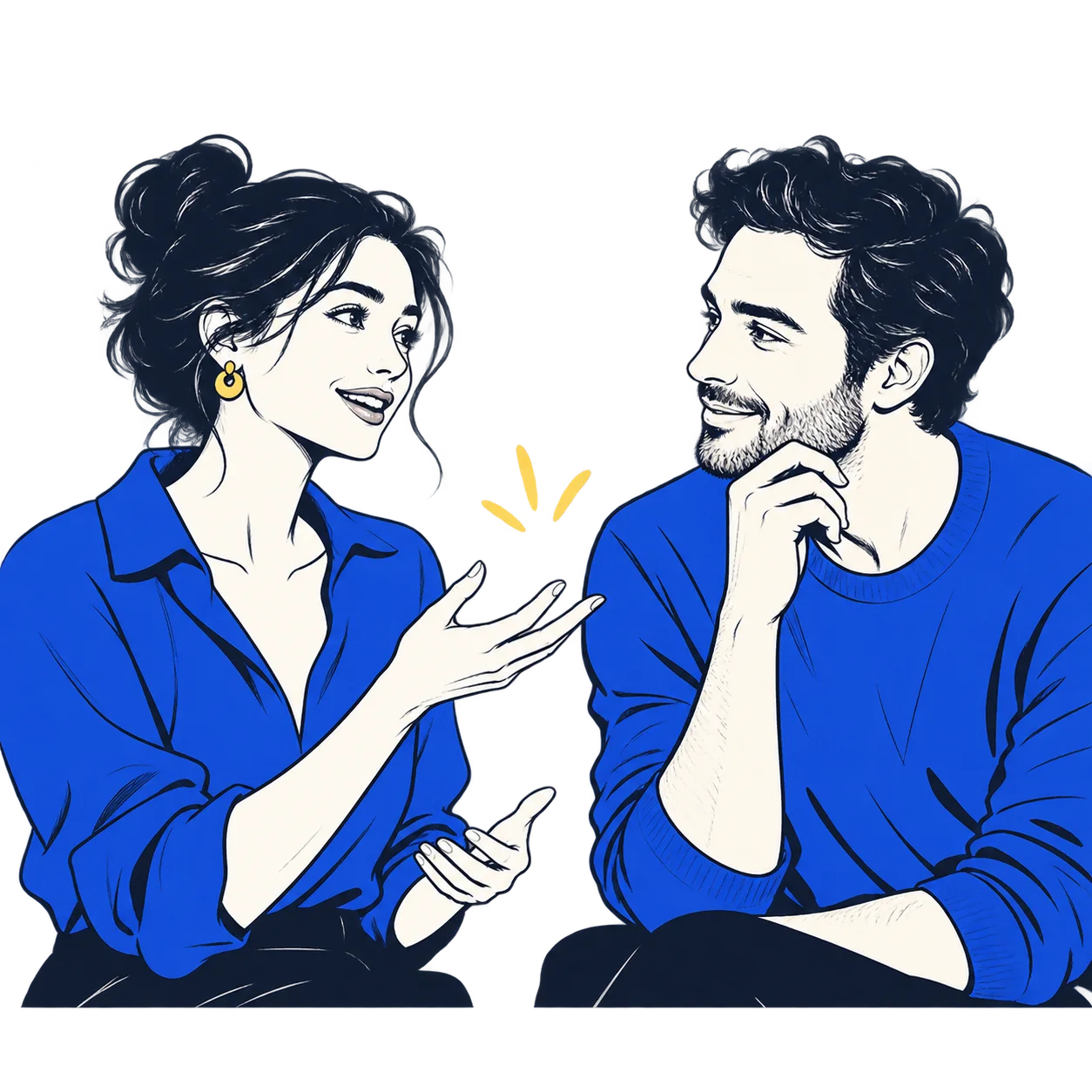
“The biggest asset, besides my new smile, was the emotional bids and listening to people's stories. Stories that I never knew before, outside of the standard engineering questions.”

Inside Conversation Radar
Four modules. Nine signal types. One job: help you notice the date you're actually having.
Learn a key lesson from the Art of Charm Bootcamp in four focused modules. Recognize nine types of signals, see the common default response and learn what a calibrated response looks like.
Conversation Radar gives you a systematic way to recognize relational signals you may currently understand only after the date is over. Each lesson helps you answer:
- What should I notice?
- What changed?
- What kind of signal might this be?
- What is my usual literal/default response?
- What does a more calibrated response look like?
- When should I stay with the moment?
- When should I leave space?
- When is there not enough reciprocity to keep pushing?
No pickup tricks. No personality transplant. No pretending to be more confident than you feel.
A better live read.
What you get
Conversation Formula
A practical structure for moving a conversation beyond surface-level exchange.
5 Levels of Listening
Listen beyond literal words and notice what the interaction is signaling.
Magnetic Body Language
Use posture, expression, and presence to communicate attention and ease.
Rapid Rapport
Build early familiarity and connection without forcing intimacy.
Nine signal types
Your 36-hour price is $47. After that, the standing price is $197.
4 modules9 signal typesInstant accessLifetime access60-day guarantee
This will probably click if:
For you
- First dates often feel fine but leave you unsure what the other person actually felt.
- You can keep a conversation going but struggle to tell whether it is becoming more personal.
- You tend to understand the signals later.
- You want something more systematic than “be confident” or “just flirt more.”
- You do not want pickup lines or manipulation.
- You are willing to pay closer attention and test what you learn in real dates.
Not for you
- You want a script that guarantees attraction.
- You want tactics for pushing through hesitation or lack of reciprocity.
- You want to manipulate people into dating you.
Art of Charm Bootcamp alumni
Real people. Skills they could use.
Conversation Radar teaches a key lesson from our Bootcamp. Meet a few of the people who have put our training into practice at Bootcamp.
“My body language, nonverbal communication, and vocal tonality were things I had no idea I was doing wrong until I saw myself on camera.”
 Andrew J.Art of Charm Bootcamp alumnusRead the original testimonial
“I gained so much confidence in my ability to connect and deepen my relationships with people. It’s amazing how much easier it has been to meet new people and create instant connections.”
 Moise A.Art of Charm Bootcamp alumnusRead the original testimonial
“After the program, I found myself forming a new social circle, meeting new people, and best of all - being connected to a large network of like-minded individuals all across the globe.”
 Henry B.Art of Charm Bootcamp alumnusRead the original testimonial
Your 36-hour price is $47. After that, the standing price is $197.
4 modules9 signal typesInstant accessLifetime access60-day guarantee
The next date does not have to become another night you decode afterward.
They say something and the energy shifts. This time, you catch it. They give you something more personal.
You do not rush past it to the next question. The date starts feeling less like an exchange of information and more like two people actually discovering each other. At the end, you have a clearer read on what was mutual and what was not.
You still cannot control the outcome. You simply stop being the last person to know what kind of date you were on.
That is the first win.
Use Conversation Radar for 60 days.
Go through the training.
Take it into real conversations.
If it is not useful, email support@theartofcharm.com within 60 days and we will refund your purchase.
Before you decide.
I'm introverted. Is this for me?
Conversation Radar is not built around extroversion. The core skill is noticing what is happening and responding proportionally. Introverts, ambiverts, and extroverts can all learn that.
Is this manipulation?
No. Conversation Radar does not teach you to manufacture another person's response. It teaches you to notice when an interaction is carrying more information than the literal words and to make your own response clearer and more calibrated. You cannot force trust, friendship, attraction, access, or interest. You can get better at noticing what is happening while it is happening.
Is this just scripts?
No. Examples make the principle concrete. The point is not to memorize a clever sentence. The point is to recognize the signal and understand the kind of response the moment can support.
How is this different from your other programs?
Conversation Radar is a focused recognition system. Its job is to help you see social signals you may currently understand only afterward. Art of Charm's deeper programs go further into practicing and installing relationship skills across real life.
What if it doesn't work for me?
Use Conversation Radar for 60 days. Go through the training. Take it into real conversations. If it is not useful, email support@theartofcharm.com within 60 days and we will refund your purchase.
Is this pickup training?
No. Conversation Radar for Dating does not teach tricks for creating attraction or pushing past lack of reciprocity. It teaches observation and calibration.
Will this get me a second date?
No product can promise another person's interest. The goal is to help you read the interaction more accurately, recognize openings and flattening sooner, and respond with more awareness while the date is still happening.
Stop finding out how the date went after the date is already over.
Learn the signals. Notice the openings. Notice the flattening.
Respond to the interaction you are actually having.
Your 36-hour price is $47. After that, the standing price is $197.
4 modules9 signal typesInstant accessLifetime access60-day guarantee